
How France Is Positioning Itself in the Global Technology Race
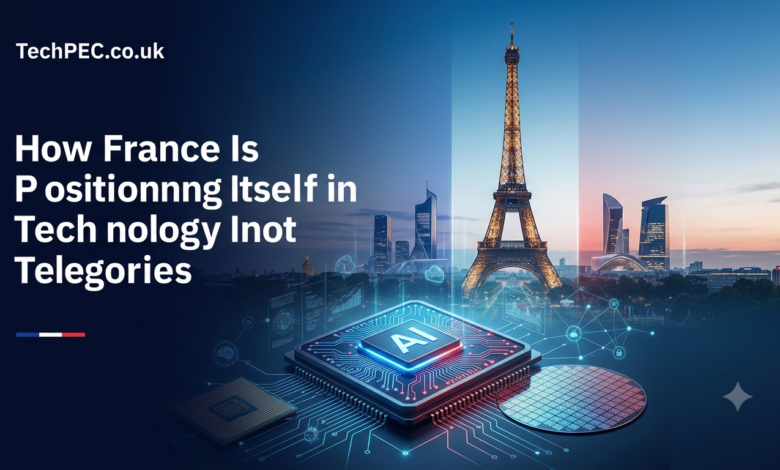
France is seeking to strengthen its position in the global technology race by investing in artificial intelligence (AI), supporting innovative startups, developing digital infrastructure and reducing its dependence on foreign technology providers. As the United States and China compete for leadership in advanced computing, semiconductors and AI, France is working to build capabilities that can support its economy and contribute to Europe’s technological independence.
The challenge is not simply to develop new technologies. France must also turn research into commercially successful products, help businesses adopt innovation and ensure that its technology companies can compete internationally. Government investment, scientific expertise and a growing startup ecosystem provide a foundation, but long-term success will depend on execution, private investment and demand for French-developed solutions.
France’s Growing Ambitions in Artificial Intelligence
Artificial intelligence has become a central part of France’s technology strategy. The country has invested in AI research, specialist education, computing infrastructure and the development of businesses that can bring AI products to market.
The national AI strategy, launched in 2018 and subsequently expanded, forms part of this effort. The government has identified approximately €2.5 billion from the France 2030 investment plan for AI-related development. In June 2026, the government also announced an additional €655 million through France 2030 to accelerate its AI strategy and expand the use of AI in public services.
One of the most visible examples of French AI innovation is Mistral AI. The company develops AI models and related products for businesses and developers, providing a European alternative in a market where many of the largest platforms originate in the United States.
France’s AI ambitions extend beyond developing chatbots. Potential applications include industrial automation, scientific research, healthcare, financial services, transport and public administration. AI systems could help organisations analyse large volumes of information, automate repetitive work and improve decision-making.
However, investment alone will not guarantee leadership. France must continue to attract skilled researchers, provide computing resources at competitive costs and help businesses integrate AI into everyday operations.
French Technology Startups Are Expanding the Innovation Ecosystem
France’s technology industry also relies on a broad network of startups, scale-ups, research centres and established companies. These organisations help transform scientific discoveries into products and services that can be sold in domestic and international markets.
According to the French government’s 2026 overview of the French Tech ecosystem, France has approximately 18,000 active startups and scale-ups distributed across the country. The ecosystem includes businesses working in AI, financial technology, healthcare, climate technology and industrial innovation.
Paris remains an important centre for investment and entrepreneurship, but technology activity extends beyond the capital. Grenoble, Toulouse, Lyon and other regional hubs contribute expertise in microelectronics, aerospace, engineering and scientific research.
Public programmes can help young companies access funding, develop prototypes and establish partnerships with larger organisations. However, startups also need private investment, paying customers and routes into international markets if they are to grow into globally competitive businesses.
Recent financial data also highlights the importance of sustainable growth. The Banque de France reported that revenue among the startups covered by its 2025 study rose by 11.6% to €29.7 billion, while fundraising declined by 5%. The figures illustrate why revenue generation and financial resilience matter alongside investment and innovation.
Semiconductors: Building Expertise Beyond Software
Artificial intelligence and digital services depend on physical infrastructure, including processors, memory, networking equipment and advanced semiconductor technologies. France is investing in this part of the technology supply chain to strengthen domestic capabilities and contribute to European manufacturing.
Under its France 2030 electronics strategy, the government has allocated €5 billion to developing and industrialising electronic technologies. The programme covers manufacturing capacity, research, skills development and technologies intended to improve energy efficiency.
Grenoble is particularly important in this effort. The CEA-Leti research institute works on microelectronics and advanced semiconductor technologies, helping bridge the gap between laboratory research and industrial production.
In January 2026, CEA-Leti inaugurated a new 2,000-square-metre cleanroom associated with the European FAMES semiconductor pilot line. The five-year initiative brings together 11 partners from eight countries and supports research into next-generation chip technologies.
These investments do not mean France can manufacture every advanced chip it needs. Semiconductor production requires specialised equipment, substantial capital and complex international supply chains. Nevertheless, strengthening research, prototyping and selected manufacturing capabilities can improve Europe’s position in important segments of the market.
The objective is to build expertise where French and European research can contribute meaningfully, rather than attempting to reproduce the entire global semiconductor industry domestically.
Cloud Computing and Digital Sovereignty
Cloud computing is another important part of France’s technology strategy. Businesses and public institutions increasingly rely on remote infrastructure to store data, run applications and deploy AI systems. Choosing a cloud provider can therefore affect data protection, operational resilience, security and long-term costs.
French providers such as OVHcloud and Scaleway operate in a market dominated by large international technology companies.
The European Union is also working to make digital sovereignty more measurable. In April 2026, the European Commission awarded sovereign-cloud contracts worth up to €180 million over six years to four provider groups, including arrangements involving OVHcloud and Scaleway. The framework assesses factors such as legal jurisdiction, operational control, security, supply chains and technological autonomy.
For France, the wider issue is not simply where data is stored. It is also who controls the underlying infrastructure, who can access sensitive information and whether organisations can move their workloads without becoming excessively dependent on a single supplier.
European cloud providers still face challenges in scale, investment and competition. Public procurement can create opportunities, but lasting competitiveness will require reliable services, strong security and commercially attractive pricing.
Cybersecurity Is Becoming a Strategic Priority
As France expands its digital infrastructure, cybersecurity has become essential to protecting businesses, government services and critical industries. Cyberattacks can disrupt operations, expose confidential information and damage public trust, making security a core requirement rather than an optional technology investment.
In January 2026, France introduced its National Cybersecurity Strategy for 2026–2030. The strategy focuses on developing cybersecurity skills, strengthening national resilience, protecting digital infrastructure and reducing strategic technological dependencies.
The challenge is particularly relevant for small and medium-sized businesses, which may lack dedicated security teams and sufficient resources to respond to sophisticated attacks.
French cybersecurity companies, research institutions and public agencies have opportunities to develop solutions for identity protection, cloud security, threat detection and incident response. Better cooperation between these organisations could help strengthen the wider European cybersecurity market.
For businesses, the practical priority is to combine innovation with sound security practices, including regular software updates, access controls, employee training and reliable data backups.
How Technology Could Benefit French Businesses and Workers
France’s technology ambitions will ultimately be measured by their economic and social impact. Research breakthroughs and startup funding matter, but their wider value depends on whether organisations adopt new tools and use them effectively.
The government’s Osez l’IA initiative is designed to accelerate AI adoption among French businesses. Its stated 2030 targets are for AI to be used by 100% of large companies, 80% of small and medium-sized enterprises and mid-sized companies, and 50% of very small businesses.
There is evidence of progress. France Num’s September 2026 survey found that 40% of French very small and small and medium-sized businesses used at least one AI solution, an increase of 14 percentage points compared with 2025.
Businesses can use AI for customer support, document processing, marketing, forecasting and data analysis. Manufacturers can explore predictive maintenance and quality control, while healthcare and research organisations can investigate applications involving complex datasets.
These opportunities also create demand for skills in software development, data analysis, AI implementation, cybersecurity and digital project management.
However, adoption needs to be practical. Businesses must assess costs, protect confidential information, train employees and evaluate whether a technology genuinely improves productivity. Buying new software does not automatically produce better business results.
The Challenges France Must Overcome
Despite its research capabilities and public investment, France faces several challenges in competing internationally.
Global competition: American companies benefit from large technology markets, established platforms and substantial private investment. Chinese companies also compete across AI, telecommunications, electronics and consumer technology. French firms must find ways to scale while differentiating their products.
Access to capital: Startups need sustained funding to move from early research to commercial production and international expansion. The Banque de France’s 2025 startup data shows that business activity can grow even when fundraising becomes more difficult, underlining the importance of financial resilience.
Commercialisation: Strong research does not automatically translate into successful products. Companies must find customers, manage distribution, compete on price and respond quickly to changing market needs.
Infrastructure and energy: AI models and advanced computing require substantial processing capacity, electricity and data-centre infrastructure. France needs to balance infrastructure expansion with energy efficiency, environmental objectives and reliable access to computing resources.
Skills and adoption: Businesses need people who can implement, manage and evaluate new technology. Smaller firms may face additional challenges involving cost, data protection and staff training.
Addressing these issues will require coordination among government, universities, startups, investors and established technology companies.
What the Next Five Years Could Mean for France’s Technology Industry
Between 2026 and 2030, several developments could shape France’s role in the global technology market.
AI adoption may expand from experimentation into more routine business operations. French AI developers could find opportunities in enterprise software, scientific research and applications where data control or specialised expertise matters.
Meanwhile, semiconductor research and industrial investment could strengthen selected areas of Europe’s electronics supply chain. Continued development of cloud infrastructure and cybersecurity capabilities could also give businesses more options when selecting technology providers.
European cooperation will be important. No single country can easily build a fully independent technology supply chain spanning advanced chips, AI computing, cloud infrastructure, software and telecommunications. Shared research facilities, coordinated investment and cross-border commercial partnerships can help distribute costs and combine expertise.
These outcomes are not guaranteed. Progress will depend on investment decisions, global demand, technical breakthroughs, regulation and the ability of European businesses to turn promising projects into sustainable commercial operations.
For France, the next five years will therefore be about more than announcing ambitious programmes. They will be about measuring whether these initiatives produce competitive products, skilled jobs, stronger infrastructure and technologies that businesses and consumers genuinely want to use.
Conclusion
France is pursuing a broad technology strategy built around AI, startups, semiconductor research, cloud computing and cybersecurity. Government programmes provide financial and institutional support, while companies and research centres contribute expertise and develop practical solutions.
The country’s ambitions also form part of a wider European effort to reduce strategic dependencies and strengthen control over essential digital capabilities. Yet technological independence does not require producing everything domestically. It requires building meaningful expertise, maintaining reliable partnerships and ensuring that critical technologies remain accessible, secure and competitive.
The long-term position of the France technology industry will depend on how effectively the country converts research and investment into commercial success. If its technology ecosystem can scale innovative businesses, accelerate responsible adoption and compete in international markets, France could strengthen its contribution to Europe’s digital economy over the coming years.
