

PC Gaming vs Console Gaming in 2026: Which Offers Better Value?
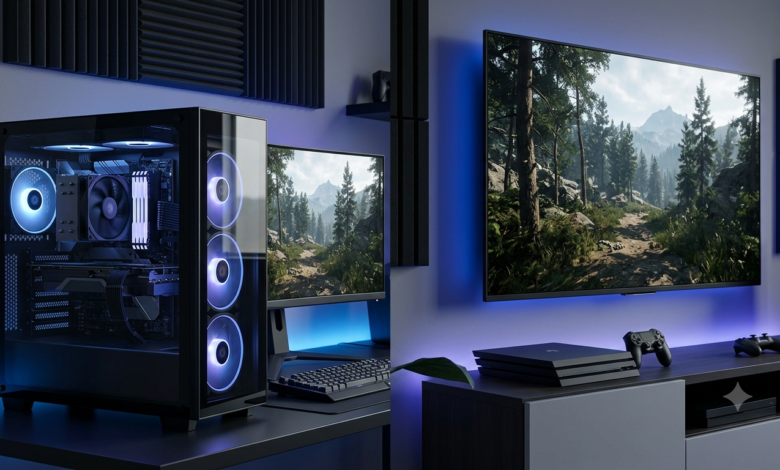
Gaming has become more accessible than ever, but choosing the right platform is still a major decision. In 2026, PC gaming and console gaming offer different advantages in performance, game selection, convenience, and long-term costs. The best option depends on how much you want to spend, the games you enjoy, and whether you want a dedicated gaming device or a computer that can do much more.
For players in France, the decision also involves current hardware prices, game discounts, online subscriptions, and the cost of accessories. A console may offer a simpler starting point, while a gaming PC can provide more flexibility and serve as a workstation for other tasks.
This guide compares PC gaming and console gaming to help you decide which platform offers better value in 2026.
1. Upfront Cost: Which Platform Is More Affordable?


The initial purchase price is often the first consideration for anyone entering the gaming world. Consoles are designed to offer a straightforward experience, while gaming PCs come in a much wider range of configurations and prices.
The cost of console gaming
A console usually provides everything needed to start playing apart from a display and, depending on the package, additional accessories. The hardware is standardized, so players do not need to compare graphics cards, processors, motherboards, or power supplies.
As of October 2026, official French listings show the following recommended prices for selected PlayStation and Xbox models:
| Console | Listed price in France |
|---|---|
| PlayStation 5 Digital Edition, 825 GB | €599.99 |
| PlayStation 5, 1 TB | €649.99 |
| PlayStation 5 Pro, 2 TB | €899.99 |
| Xbox Series S, 512 GB | €499.99 |
| Xbox Series X, 1 TB | €799.99 |
These are official listed prices, not guaranteed street prices. Bundles, promotions, refurbished products, and retailer availability can change the amount you actually pay.
The Xbox Series S is a compact, digital-only option, while the standard PlayStation 5 and Xbox Series X offer different combinations of storage, performance, and disc support.
The cost of building a gaming PC
Gaming PCs vary much more in price. A budget system may use entry-level components, while a mid-range machine can provide higher graphics settings, faster frame rates, and more room for future upgrades.
However, the cost of a PC setup can include more than the tower itself:
-
The computer, including the graphics card and processor.
-
A monitor capable of displaying the desired resolution and refresh rate.
-
A keyboard and mouse.
-
A headset or speakers.
-
Windows or other software costs, where applicable.
Recent PC hardware price guides show that a capable gaming PC can cost substantially more than a console, particularly when buying new components and peripherals together. Memory and storage prices can also influence the overall budget.
Verdict: Consoles generally offer a simpler entry point for players who need a complete gaming device at a predictable cost. A gaming PC becomes more attractive if you already own peripherals or need a computer for work, study, or content creation as well as gaming.
2. Gaming Performance: Which Delivers Better Graphics?


Performance depends on the hardware, the game, and the display. Neither platform automatically wins every comparison.
PC gaming performance
A gaming PC can be configured for different priorities, including high-resolution graphics, fast competitive gameplay, ray tracing, or a balance between image quality and frame rate.
Its main advantage is customization. Players can select a graphics card and processor to suit their budget, adjust graphics settings, and pair the system with a high-refresh-rate monitor.
Depending on the hardware and game, a suitable PC may offer:
-
Higher frame rates in supported titles.
-
More detailed graphics settings.
-
Support for ultrawide monitors and multiple displays.
-
A choice of resolutions and performance targets.
-
Access to technologies such as upscaling and frame generation when supported.
The limitation is cost. Higher performance often requires more expensive components, and the most demanding games can push even powerful systems to their limits.
Console gaming performance
Consoles offer a standardized hardware target for developers. Games can be optimized around a known configuration, and many titles provide selectable graphics or performance modes.
Depending on the game and console, these modes may prioritize image quality or smoother gameplay. Some titles support output up to 120 frames per second, but that does not mean every game runs at that frame rate or at native 4K resolution.
Consoles also avoid much of the hardware configuration that PC players may encounter. Players can generally install a game, select the available settings, and begin playing without choosing individual components.
Verdict: PC gaming is the stronger choice for players who want extensive performance customization and are willing to pay for it. Consoles remain competitive for straightforward, optimized gaming on a television.
3. Game Prices and Discounts: Where Can You Save More?
The price of the hardware is only one part of the overall cost. Over several years, the games you buy can make a significant difference to your gaming budget.
PC game stores
PC players can purchase games through several digital storefronts, including Steam, Epic Games Store, and GOG.
Competition between storefronts creates opportunities to find discounts, promotional bundles, and occasional free games. Players can compare prices before buying and may find older titles at substantial discounts during seasonal sales.
PC gaming also supports a large library of older games, independent releases, and community-created modifications. Availability and compatibility vary, but this can extend the useful life of a game well beyond its original release.
Console game prices
Console players can purchase games digitally or, on supported models, buy physical copies. Physical games can sometimes be found at discounted prices, purchased second-hand, or resold after completion.
Digital storefronts also offer seasonal promotions, although discounts and prices vary by game and platform.
There is no universal rule that PC games are always cheaper. A discounted physical console game may be better value than a PC purchase, while a PC bundle or digital sale may offer a substantial saving elsewhere.
Verdict: PC gaming often provides more opportunities to compare prices across digital stores. Consoles can be competitive when players take advantage of physical-game discounts, used copies, and sales.
4. Online Multiplayer and Subscription Costs
Online gaming costs depend on the games you play and the platform you choose.
PC gaming
Many PC games allow online multiplayer without a general paid platform subscription. Players may still need to purchase the game, pay for a particular service, or subscribe to an optional membership for additional benefits.
This can make PC gaming attractive to people who play online regularly but do not want another recurring expense.
Console gaming
On consoles, access to online multiplayer in many paid games is linked to a subscription. PlayStation Plus and Xbox Game Pass offer different membership tiers and benefits, and their prices and included games can change over time.
Subscription plans may include access to selected game libraries, online features, or other benefits, depending on the tier. However, a subscription does not necessarily include every new release or every game you want to play.
When comparing costs, calculate the subscription expense over the period you expect to own the platform. A monthly fee can add up over several years, particularly if you maintain more than one service.
Free-to-play games may have different online-access requirements from paid games, so check the rules for your specific title.
Verdict: PC gaming often has an advantage for players who mainly want online multiplayer without a general console subscription. Console subscriptions may offer good value for people who regularly play several included games.
5. Game Libraries and Exclusive Titles


The games you want to play may be the most important factor in your decision. The cheapest platform is not necessarily the best value if it cannot run your favourite titles.
Why PC gamers have more flexibility
PC gaming offers a broad range of genres, including strategy games, simulation games, massively multiplayer online games, competitive shooters, and independent releases.
It is also the natural home for many community modifications, custom servers, and user-created content. These additions can change how a game looks or plays and sometimes extend its lifespan considerably.
PC players can also use different input devices, including controllers, racing wheels, flight sticks, and specialized peripherals, depending on the game.
Why console players may prefer a dedicated platform
Consoles offer access to platform-specific games and a more standardized experience. Certain franchises, controller-focused games, and living-room multiplayer experiences may be particularly appealing on a console.
Some titles once associated exclusively with one platform have also become available on additional systems, so exclusivity can change over time.
Before purchasing hardware, check the current availability of the games you most want to play rather than relying on old assumptions about which platform has the largest library.
Verdict: PC gaming is particularly appealing for strategy, simulation, modding, and competitive gaming. Consoles can be the better choice when your preferred franchises, friends, or local multiplayer habits are closely tied to a specific console ecosystem.
6. Upgrades and Long-Term Ownership
A gaming platform’s long-term value depends partly on how easy it is to maintain and improve.
Upgrading a gaming PC
A desktop gaming PC allows owners to replace or upgrade selected components. Depending on compatibility, you may be able to install a more powerful graphics card, increase memory, add storage, or replace other parts without buying an entirely new computer.
This flexibility can spread costs over time. However, upgrades are not always simple: a new graphics card may require a stronger power supply, more physical space, or a compatible processor to deliver its full potential.
Gaming laptops are a different case. Their graphics and processors are generally far less upgradeable than those in desktop systems.
Owning a console
Consoles offer a more standardized experience. Players do not usually need to replace internal components to keep playing supported games, although additional storage and accessories may be available.
The trade-off is limited hardware flexibility. If you want a major performance improvement, you may need to buy a newer console rather than upgrade the existing system.
Both platforms also depend on software support, game availability, and the condition of the hardware.
Verdict: Desktop PCs offer greater upgrade flexibility. Consoles are simpler to maintain for players who prefer a consistent system and do not want to manage hardware changes.
7. Ease of Use: Which Platform Is Better for Beginners?
For someone buying their first gaming system, simplicity can be just as important as graphics or performance.
A console generally involves fewer setup decisions. Connect it to a display, sign in, install a game, and start playing. Game developers optimize for a known hardware configuration, reducing the need for players to troubleshoot component compatibility.
A PC requires more choices. Players may need to check system requirements, configure graphics settings, manage drivers, and troubleshoot software or hardware issues. Many modern PC games work smoothly, but occasional configuration is part of the experience.
On the other hand, a PC can replace or complement a general-purpose computer. It can support web browsing, office work, programming, video editing, streaming, and other tasks.
Verdict: Consoles are usually easier for beginners who want to focus on playing games. PCs are more versatile for users who are comfortable with technology or want one device for gaming and other activities.
8. Electricity Consumption and Other Hidden Costs
Electricity is another factor worth considering, especially for people who play for several hours each day.
A gaming PC’s power consumption varies considerably depending on its processor, graphics card, display, workload, and settings. A powerful desktop under a demanding gaming workload can consume more electricity than a lower-powered console, although actual consumption depends on the specific devices being compared.
Consoles generally offer a more standardized power profile, but their consumption also varies by model and game. A television or monitor, speakers, accessories, and other connected equipment add to the total for either platform.
Other expenses can include:
-
Replacement controllers, keyboards, mice, or headsets.
-
Additional storage for large game libraries.
-
Repairs and replacement parts.
-
Paid multiplayer subscriptions where required.
-
Upgrades, software, and peripherals.
To estimate electricity costs, check the actual power consumption of your equipment and multiply it by the hours you play and your electricity tariff. Maximum power ratings alone do not indicate typical gaming consumption.
Verdict: Consoles offer predictable hardware requirements, while gaming PCs have a wider range of power consumption. Neither platform is automatically cheaper to run; the specific hardware and playing habits matter.
9. PC Gaming vs Console Gaming: Which Offers Better Value?
The following table summarizes the main differences for buyers in 2026.
| Feature | Gaming PC | Gaming console |
|---|---|---|
| Initial cost | Wide range; capable systems can be expensive | Usually a more straightforward purchase |
| Performance | Highly customizable | Standardized and game-optimized |
| Game discounts | Multiple storefronts and frequent promotions | Digital sales and physical-game deals |
| Online multiplayer | Often no general platform subscription required | Subscription commonly required for paid online multiplayer |
| Game modifications | Broad support in many games | More limited and game-dependent |
| Hardware upgrades | Many desktop components can be upgraded | Mostly limited to accessories and storage |
| Ease of setup | More configuration options | Generally simpler |
| Other uses | Work, study, creative software, and gaming | Primarily gaming and entertainment |
| Living-room experience | Possible, but may require extra setup | Usually designed for this use |
| Best suited to | Flexibility, customization, and multiple uses | Convenience and dedicated gaming |
10. Which Platform Should You Choose in 2026?
The right choice depends on your budget and priorities rather than a universal winner.

Choose a gaming PC if you want flexibility
A PC is a strong option if you enjoy competitive games, strategy titles, simulation games, modifications, and detailed graphics settings. It is especially attractive if you also need a computer for work, study, or content creation.

Choose a console if you want simplicity
A console is well suited to players who want a dedicated gaming device, prefer playing on a television, and do not want to select or upgrade individual computer components.

Compare subscriptions and existing equipment
If your budget is limited, compare the total cost of the console, games, required subscriptions, and accessories against a complete PC setup. Include any monitor, keyboard, or mouse you still need to buy.
Conclusion
PC gaming and console gaming both offer strong value in 2026, but they suit different kinds of players.
Consoles are generally easier to set up and provide a predictable way to enjoy modern games. Gaming PCs offer more flexibility, a broader range of uses, greater upgrade options, and access to multiple digital storefronts.
For players in France, compare current local prices and the games you intend to play before making a purchase. Consider the total cost over several years, including subscriptions, accessories, electricity, and potential upgrades.
The bottom line: Choose a console for straightforward, dedicated gaming at a predictable hardware cost. Choose a gaming PC if flexibility, customization, and use beyond gaming are worth the additional investment. The best value is the platform that fits your actual gaming habits—not simply the one with the lowest purchase price.
